
Tired eyes are common, but you can feel better, look better, and be more confident.
Many men look more tired, older, or heavier around the eyes before they notice major
changes anywhere else.
first area to show fatigue and aging.
elasticity, overlap...
combination, not one generic treatment.
There are good options. Some are nonsurgical. Some are combined for better results. Getting the win
depends on what is actually creating the tired look on your face.
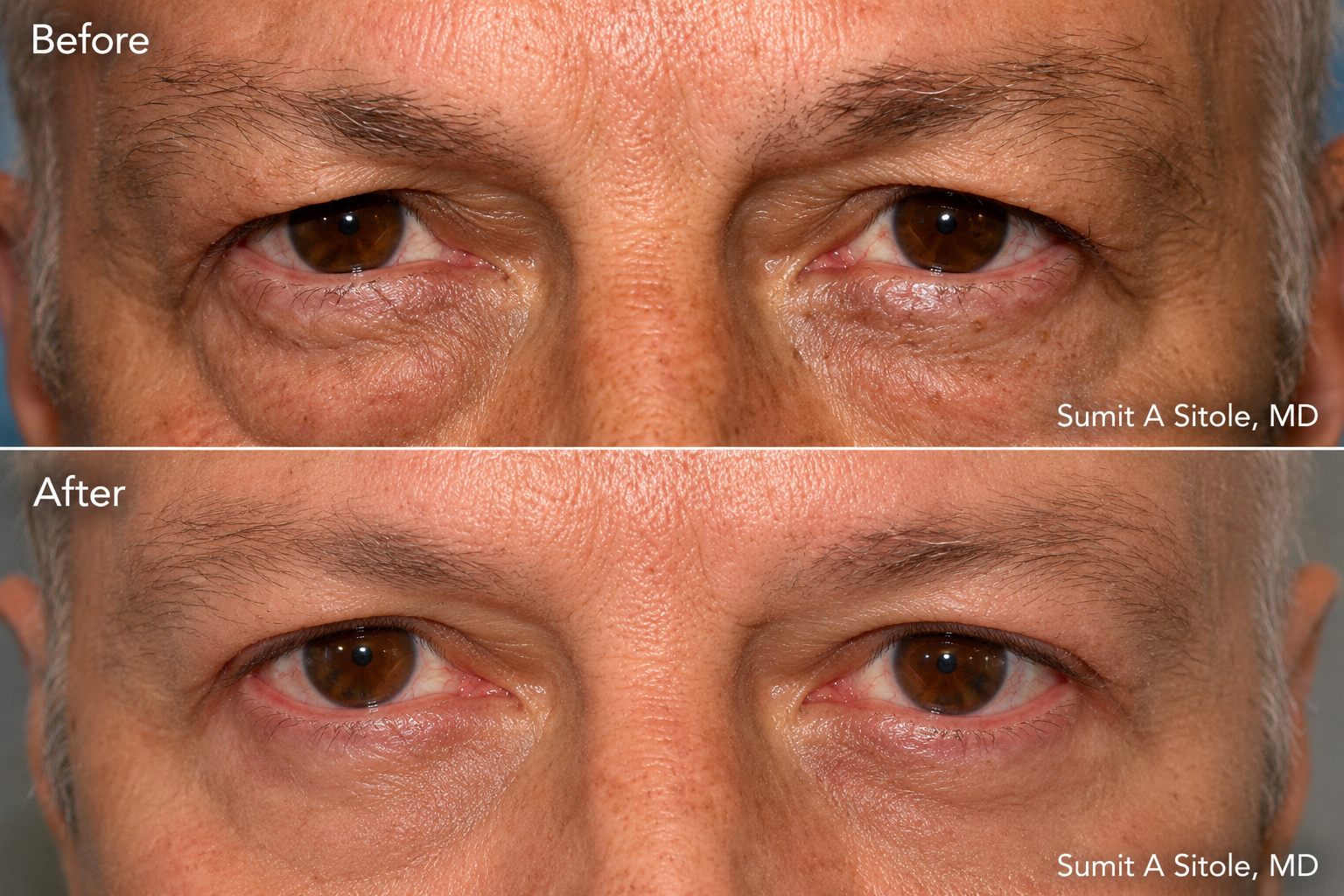
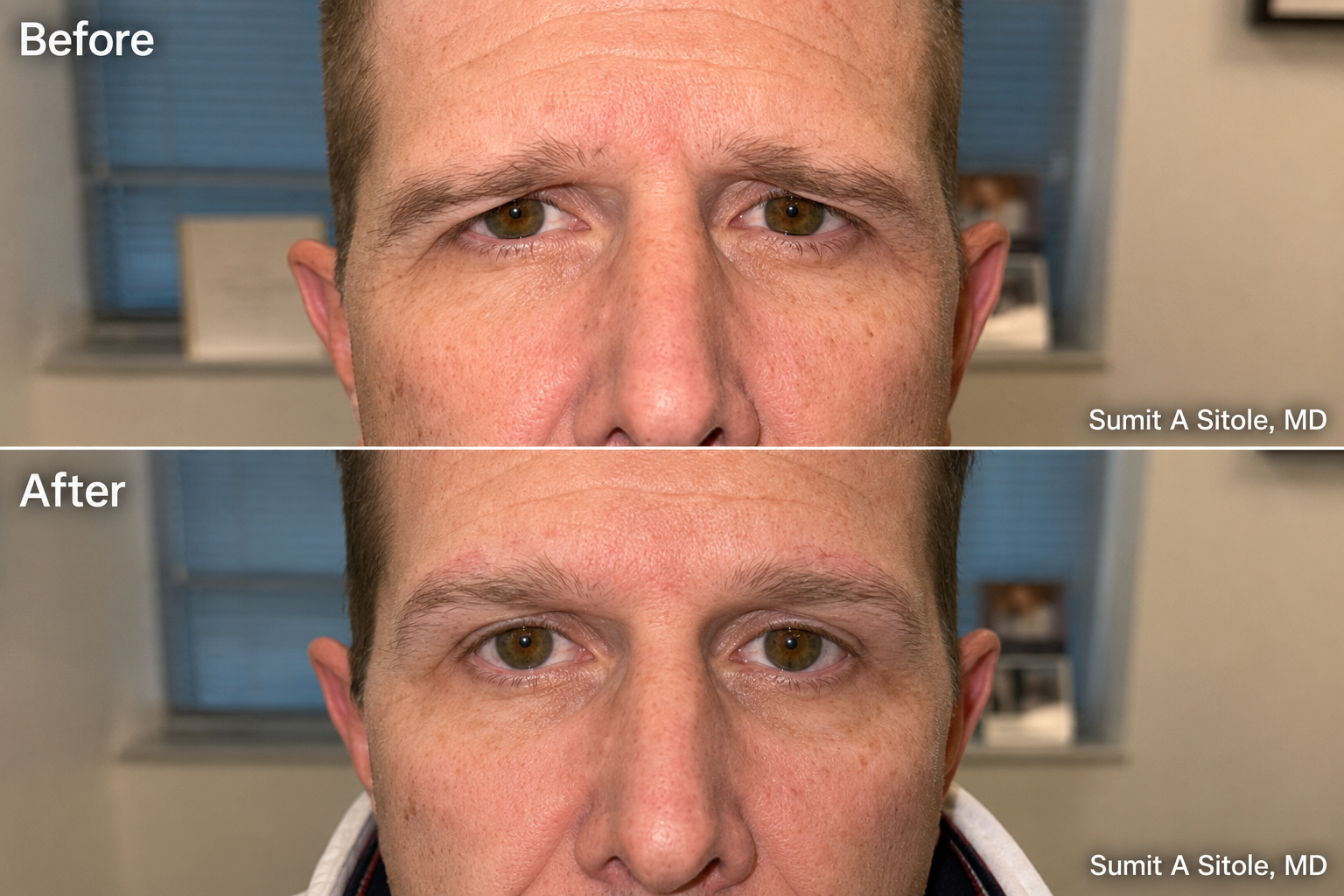
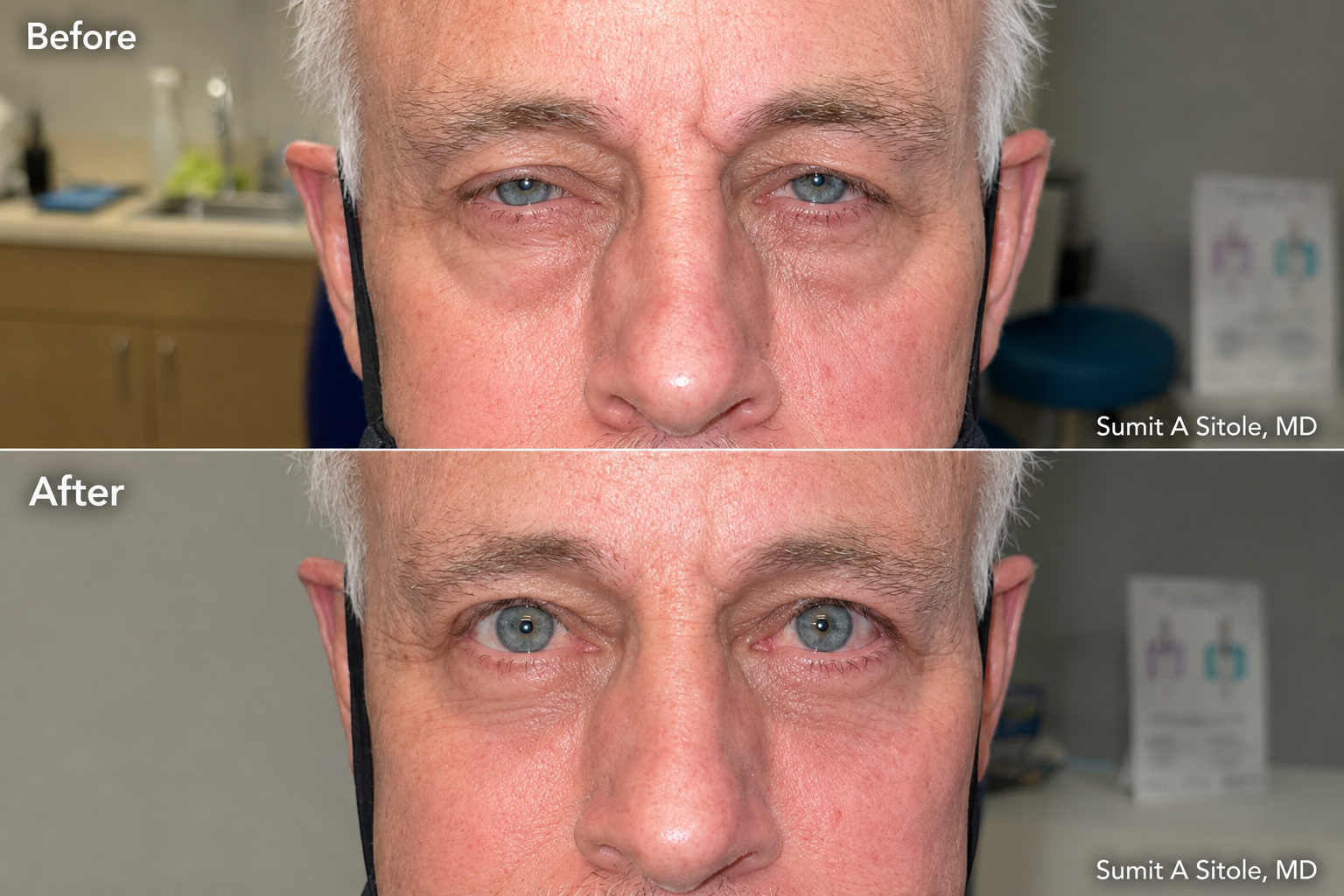
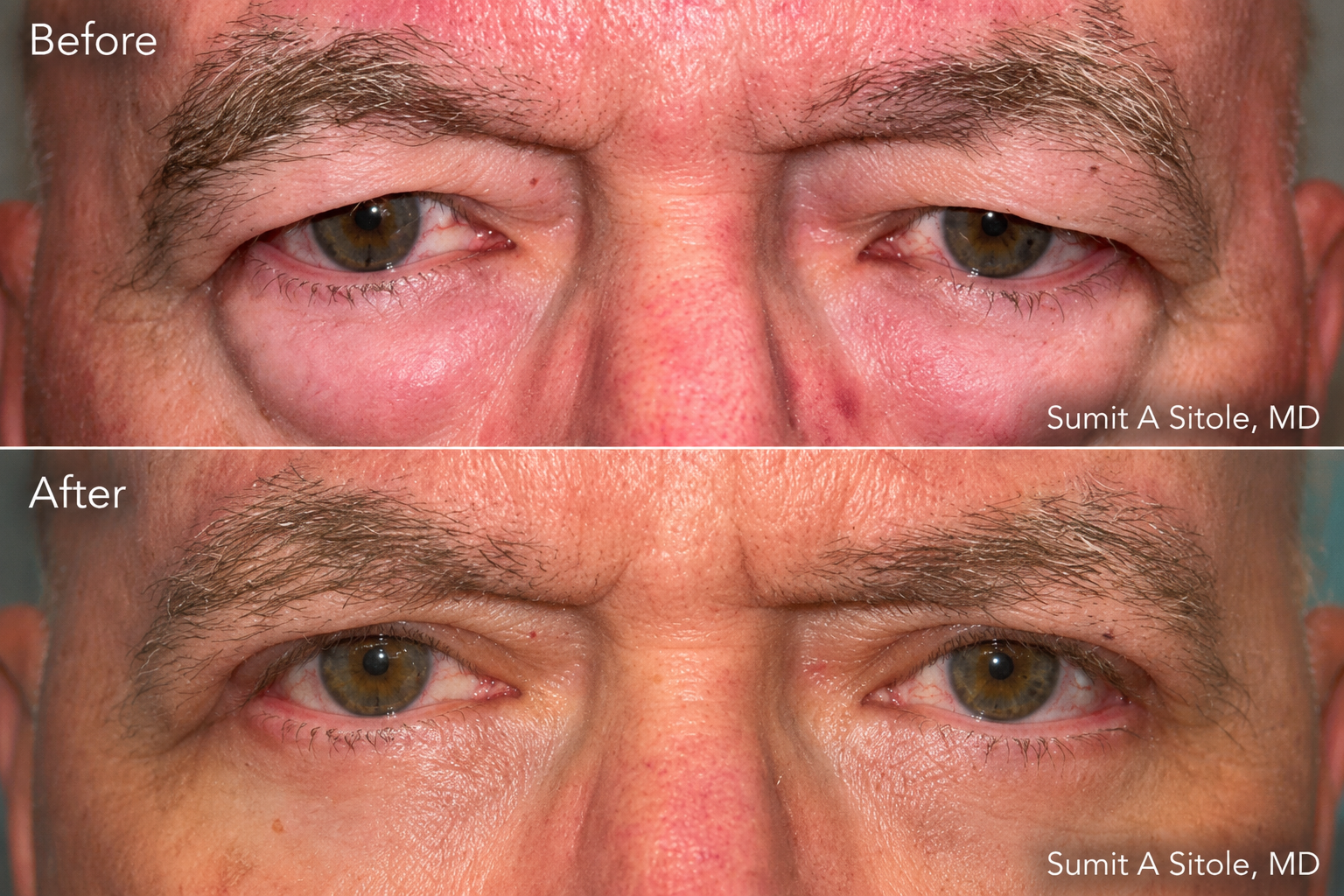
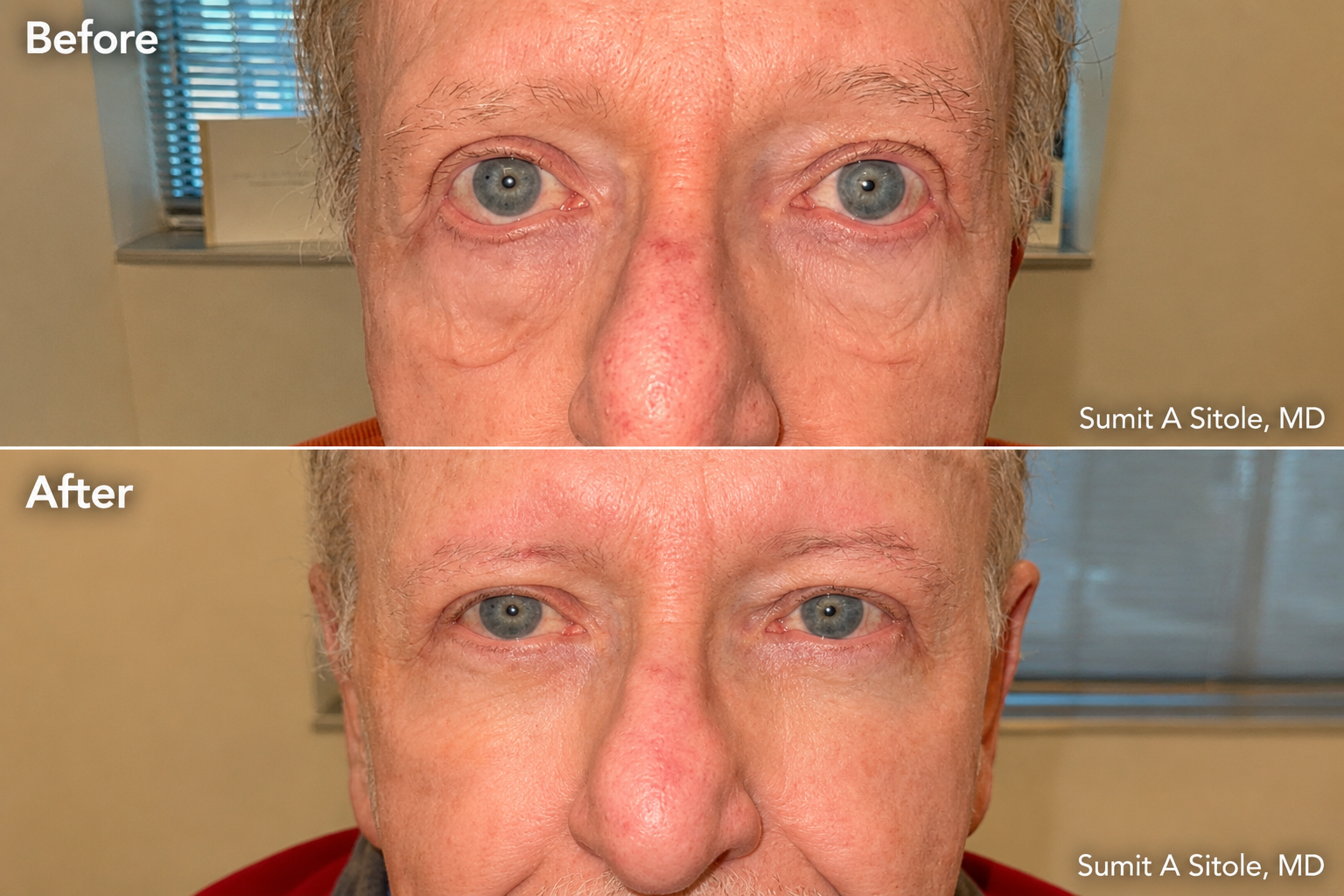
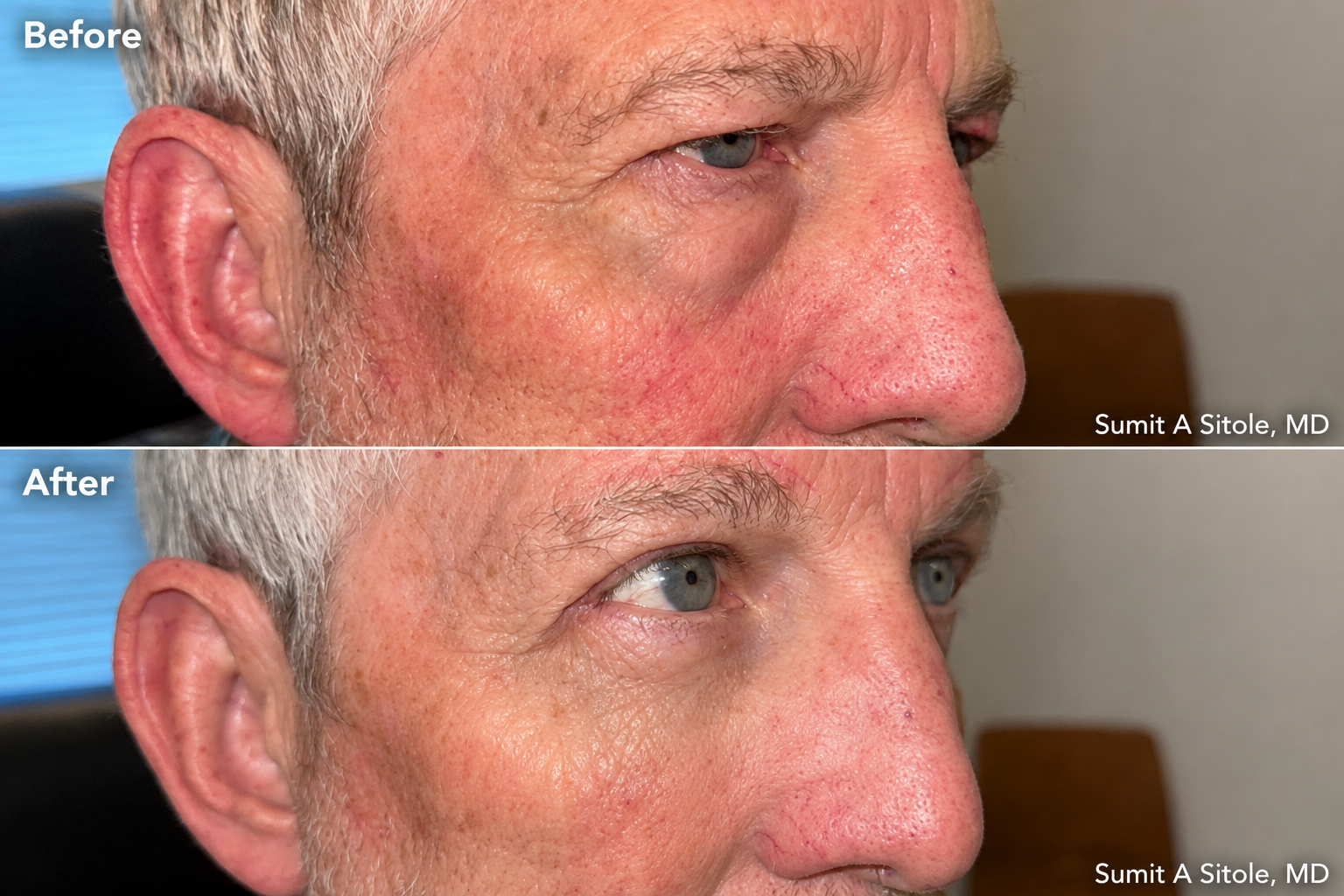
planningThe right treatment based on you
not overdone
Request a slot
In addition to regular Oculoplastics & Aesthetics appointments, there is availability for off-hours consultations dedicated to men.
Start with what is actually causing the tired look.
Bags vs hollows
Puffiness and bulging usually need a different plan than hollow shadows. They can also exist at the same
time.
Skin attributes
Crow’s-feet, crepey skin, and discoloration are different problems from eyelid heaviness, festoons, or a
low brow.
Color matters
Dark circles may come from pigment, visible blood vessels, hollowing, or the way light hits the orbital
rim.
Combos win
Botox + laser, Botox + filler + laser, laser + PRF, or surgery + laser may create a more complete result
than any one treatment alone.
What actually makes eyes look tired?
Start high-level. Open only the sections you care about. The key point: tired eyes are
usually multifactorial, meaning several overlapping causes are present at once.
Under-eye bags, malar mounds, festoons, tear trough deformity (the hollow groove under the eye),
cheek support, and facial asymmetry.
Malar mounds (puffiness over cheekbone)
Festoons (larger sagging folds)
Tear trough (hollow shadow groove)
Midface volume loss (cheek deflation)
If the main issue is true bagging or festoons, filler alone is usually not the whole answer. If
the main issue is hollowing, carefully chosen filler, PRF, fat transfer, or cheek support can
matter more.
Crow’s-feet, static wrinkles (present at rest), dynamic wrinkles (expression-related), crepey skin,
laxity, thickness, collagen, and hydration.
Crepey skin (thin crinkled texture)
Skin laxity (elasticity and tightness)
Skin thickness
Collagen content
When surface quality is the dominant issue, the treatment discussion shifts toward
neuromodulator, microneedling, PRF, and energy- or laser-based resurfacing rather than volume
alone.
Discoloration, hyperpigmentation (excess melanin), vascular dark circles (bluish or purple tone),
post-inflammatory pigmentation, skin tone, and Fitzpatrick type.
Pigment spots
Vascular tone
Fitzpatrick skin type (how skin reacts to sun)
Color issues change what is safest and most useful. Skin tone and Fitzpatrick type matter when
choosing laser intensity, resurfacing depth, and pigmentation-focused treatments.
Ptosis (droopy upper lid), dermatochalasis (excess eyelid skin), lower lid looseness, brow position,
dry eye, previous procedures, healing capacity, downtime tolerance, and budget.
Brow position
Dry eye
Previous filler or surgery
Downtime tolerance
A consultation matters because the eye area is delicate. Functional eye health, blink quality,
prior filler history, prior eyelid surgery, and healing/pigmentation risk all affect what makes
sense.
Complete grouped list of factors, kept collapsed by default so the page stays readable.
Structural + appearance factors
- Under-eye bags, malar mounds, festoons, orbital fat prolapse, tear trough
deformity, midface volume loss, facial asymmetry. - Upper eyelid droopiness (ptosis), lower eyelid droopiness, ectropion, entropion,
canthal tilt, brow position, dermatochalasis. - Crow’s-feet, static wrinkles, dynamic wrinkles, crepey skin, roughness,
scarring. - Skin laxity (elasticity and tightness), thickness, collagen content, hydration,
sebaceous activity, translucency. - Discoloration/spots, hyperpigmentation, vascular dark circles, post-inflammatory
hyperpigmentation, skin tone, Fitzpatrick skin type scale. - And others...
Medical + planning factors
- Orbicularis oculi activity (the muscle around the eye), forehead compensation,
edema, lymphatic drainage, chronic vs transient puffiness. - Genetics, aging changes, lifestyle factors, allergies, thyroid or other medical
conditions. - Orbital rim anatomy, cheekbone projection, skeletal support, blink function, dry
eye, tear production, visual field obstruction. - Sensitive/reactive skin, healing capacity, scar tendency, pigmentation risk
after treatment, age, biologic skin age, hormones. - Sun exposure, sleep position, diet/hydration, smoking/vaping, screen time,
previous fillers, lasers, surgeries, downtime and maintenance preferences,
contraindications. - And others...
Structure + volume + skin quality + muscle activity +
fluid dynamics, and many other factors often all contribute. That is why you want an
expert with a full spectrum of options.
What can treat “tired eyes”?
Each section starts simple, then expands into more detail: surgical vs nonsurgical,
technology or process, how it works, typical downtime, and where pairing can help. This not
comprehensive. It is complex and why you want expert involvement and wide
range of options.
Most relevant when movement lines and surface wrinkling are more obvious than true bags or
hollowing.
Nonsurgical. Neuromodulator used to soften crow’s-feet and expression-driven lines
by weakening wrinkle-causing muscles.
targeted muscles contract less.
Best when the lines are dynamic, meaning they show more when you smile or
squint. Often paired with resurfacing when static wrinkles and texture are also
present.
Nonsurgical. Controlled micro-injury plus optional platelet-rich fibrin to stimulate
turnover and improve fine lines, texture, and some scarring.
PRF from your own blood when added.
renewal.
treatment depth.
Useful when the issue is more about skin quality than heavy structural bagging.
PRF can be used topically with microneedling or injected depending on the plan.
Nonsurgical. Radiofrequency plasma resurfacing that can be adjusted from lighter to
more aggressive treatment settings.
skin, texture, scars.
settings; more for aggressive settings.
Often attractive for men who want a more efficient recovery than traditional
resurfacing. Can be part of an eye-area refresh when skin texture is a major
factor.
Most relevant when the tired look comes from under-eye hollows, cheek deflation, or a harsh
lid-cheek transition.
Nonsurgical. Hyaluronic-acid filler can restore volume in under-eye hollows, cheeks,
and nearby support areas when selected carefully.
where tissue has deflated.
Most useful when shadowing is driven by hollows rather than true fat protrusion.
Requires restraint and strong knowledge of under-eye anatomy.
Nonsurgical. Platelet-rich fibrin is drawn from your own blood and injected into
hollow areas, including under the eyes and cheeks.
of fibrin-rich material.
and elastin response.
injection-related downtime.
Can be done alone or paired with filler. On the practice site, PRF is described
as helpful for under-eye hollows and cheeks and often performed in a series.
Surgical / minimally invasive volume restoration using your own fat for under-eye
hollows, cheeks, temples, and related support areas.
restore contour with your own tissue.
harvest and injection areas.
Often makes more sense when long-term volume restoration is the goal and facial
deflation is a major contributor to the tired look.
Surgical. Repositions the cheek pad when midface descent is part of the problem and
the area below the lower eyelid looks deflated or droopy.
lid-cheek support.
youthful position.
1–2 weeks for daily activity.
This is not the first-line answer for every patient, but it can matter when the
tired look is driven by midface descent rather than just skin or small-volume
changes.
Most relevant when you have visible bulging, puffiness, or loose tissue under the eyes rather than
mainly surface aging.
Surgical. Corrects excess skin and fat under the eye that can create bags, dark
circles, and a tired appearance.
may remove excess skin.
recovery planning matters.
One of the most direct options when true bags are the dominant problem. It is
often paired with resurfacing or fillers when wrinkles, crow’s-feet, or
hollowing are also present.
Surgical. Designed for festoons, also called malar mounds or bags, when there is
sagging or fluid-filled puffiness over the cheekbone just below the lower eyelid.
mounds.
responsible for the festoon.
blepharoplasty when both issues are present.
Important because festoons are different from ordinary under-eye bags. If the
problem is actually a festoon, simpler treatments may disappoint.
Minimally invasive. Intelligent radiofrequency designed to stimulate collagen and
elastin and improve firmness, including around delicate eye-area skin.
(iRF)
collagen, elastin, and microcirculation.
or swelling may last a day or two.
More about tightening and support than removing true protruding fat. Useful as a
standalone or companion treatment when laxity is part of the issue.
Most relevant when the eye area looks tired because the skin itself has aged, thinned, darkened, or
lost clarity.
Nonsurgical / energy-based. Combines HALO®, MOXI™, and Erbium resurfacing in
one customizable treatment to address multiple skin concerns with one recovery
period.
1927 helps pigment/tone, 1470 stimulates deeper renewal.
uneven tone, sun damage, surface irregularities.
darkening, flaking; varies by intensity.
Especially useful when more than one surface issue is present. It can be adapted
for delicate periocular areas by an experienced eyelid-and-face team.
Nonsurgical / energy-based resurfacing. Available in lighter nano, moderate micro,
and deeper full-field approaches depending on severity and downtime tolerance.
aging, deeper wrinkles, and significant sun damage.
collagen remodeling.
1–2 days to 7–10+ days for deeper settings.
Often paired with lower blepharoplasty when both contour and surrounding skin
quality need work.
Nonsurgical. Useful when tired eyes are amplified by sun damage, broken capillaries,
brown or red pigment, and mild looseness.
vessels.
hyperpigmentation, melasma, and skin tightening.
often best paired with Opus Plasma.
These options do not correct true fat bags or eyelid heaviness, but they can
make the eye area look much cleaner and healthier when color and skin quality
are major contributors.
Most relevant when the upper lid or brow position is making you look fatigued, disinterested, or
older even before under-eye issues are addressed.
Surgical. Removes excess skin, fat, and sometimes muscle from the upper lid to
create a more refreshed and energetic appearance.
eyelids.
to minimize visible scarring.
contour.
Sometimes paired with filler or laser resurfacing to address fine lines and
crow’s-feet at the same time.
Surgical. Repositions the brow to a more youthful and relaxed position when sagging
brows are contributing to a tired or heavy look.
tired upper face expression.
for smoother contour.
light activity; more for strenuous activity.
Useful when the brow is the actual cause of upper-lid heaviness. If the plan is
wrong here, treatment can miss the real problem.
A clear, non-sales explanation of why combinations are often the best answer.
Movement + texture
Example: Botox + resurfacing. One addresses overactive muscles; the
other addresses crepey skin and static texture.
Volume + skin quality
Example: filler or PRF + laser or microneedling. One supports contour;
the other improves surface quality and tone.
Structure + finish
Example: lower blepharoplasty + Contour TRL or HALO TRIBRID. One
improves contour; the other improves the skin around it.
This is usually where men decide a consultation is worth it. The
eye area is small, but the variables are not.
A conversation, not a sales pitch.
You won't be handed a glossy menu or steered toward a package. The visit is a quiet, unhurried
conversation about what's actually going on around your eyes and what — if anything — is worth doing
about it.
Dr. Sitole, a fellowship-trained oculoplastic surgeon, sets the protocols, personally trains every
aesthetician on staff, and steps into the room whenever he is available or your case calls for it.
Your questions get answered in plain language, at your pace. If the most sensible answer is doing
less — or nothing today — that's what you'll hear.
Book the consultation and get the specific explanation
for your face.
It's about what you want
Some men come in for a subtle reset before a wedding, a photo, or a new role. Some want a more
substantial change and a real plan for it. Some just want to understand — is it bags, hollows, skin,
brow heaviness, or something else entirely? — and hear what's actually available for it.
All three are reasons we built this consultation. There is no minimum commitment to walk in, and no
expectation that you'll book a treatment by the time you walk out. You'll leave with a clear
explanation of your face, and the decision is yours.
Book the consultation and get the specific explanation
for your face.
Expert Driven, Direct, Problem-first.
Built for men who want clear options and subtle change.
Its not just these...
Not a MedSpa
- Surgeon-led, not surgeon-on-paper: Dr. Sitole, a fellowship-trained oculoplastic surgeon, is on-site, personally selects and trains every aesthetician on staff, and is involved in your evaluation and treatment whenever the case warrants. At many MedSpas, the supervising MD is rarely in the building, does not perform procedures, and didn't pick the people who actually see you (and the supervising MD is not necessarily a surgeon). If you choose a surgical option, the procedure may be performed at an office or surgery center location.
- The full toolkit informs every plan: MedSpas tend to recommend whatever their staff is licensed to perform, when the only tool is a hammer, everything looks like a nail. Here, your plan is shaped by someone whose options span the full surgical and non-surgical spectrum, which often means doing less, not more.
- Direct, goal driven, no spa language and promotion: No "treatment of the month." A direct plan built around your goal, your specifics, your calendar, and your preferences.
Why men choose this approach
- Discreet + efficient: appointments built around busy schedules.
- Natural results: “you look better,” not “you had something done.”
- Problem-first: tired eyes, definition, repair, body composition.
- Plan-based: treatment based on your goals and parameters.
What you’ll never get
- Pressure to buy a long skincare routine
- Vague spa language
- Overcorrection or trendy looks
- Surprise downtime—when downtime exists, planning guidance comes first
How it works
Simple, direct, measurable.
FAQ
The questions men actually ask.
Ready to book?
Limited monthly availability. Request a slot and the office will confirm timing and next steps.